Blinking Lights and Blind Spots: A Two-Hour Walk-Round for Directors
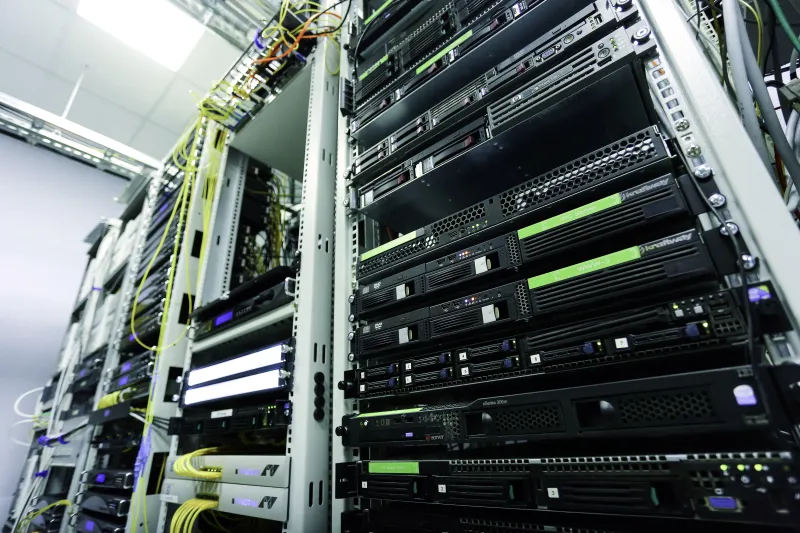
Photo: server room comms cabinet network switches blinking lights office corridor, via images.ctfassets.net
There is a room in most UK organisations that appears on no board agenda and in no director's diary. It is usually locked, often warm, and frequently described in conversation as "the comms cupboard" long after it has grown into something considerably larger. Inside sit the switches, routers, private branch exchange equipment, uninterruptible power supplies and patch panels on which every digital service depends. The board reviews the service dashboard each quarter; almost nobody reviews the room that makes the dashboard possible.
That gap is worth correcting, not because directors should become engineers, but because physical estate hygiene is the least expensive diagnostic an organisation can run. It requires two hours, one competent guide and a notebook. It surfaces the single points of failure that the risk register has never captured, and it generates a dated record that proves useful the moment an insurer, an auditor or a dissatisfied customer asks what the organisation actually knew about its own infrastructure.
Why the physical estate slips off the agenda
Dashboards are comfortable. They arrive pre-formatted, they trend in the right direction, and they allow a board to discuss technology without touching it. The room behind the keypad offers no such comfort. It is untidy, it smells faintly of warm plastic, and it exposes the distance between what the organisation believes about its resilience and what is physically true.
There is also a governance reason for the neglect. Responsibility for the space is usually assumed rather than assigned. The facilities team holds the keys, the IT function holds the equipment, and the finance director holds the maintenance contracts. Nobody holds the whole picture, so nobody commissions the inspection. The result is a physical estate that drifts quietly out of alignment with the documented one.
What to look for in two hours
The purpose of the walk-round is observation, not diagnosis. A director should record what is visible and ask what is not. Five areas repay attention.
Patching and labelling discipline. Open, or ask to have opened, one patch cabinet. Are the cables labelled at both ends? Is there a current patch schedule, and does the physical arrangement match it? An unlabelled cabinet is not merely untidy; it means that any fault resolution begins with an undocumented discovery exercise, and that a departing engineer takes institutional memory with them.
Power protection and test dates. Every uninterruptible power supply should carry a legible test label with a date inside the last twelve months. Where batteries are nearing end of life, there should be a replacement plan. Ask to see the last test record rather than accepting a verbal assurance. A UPS that has never been tested is a hypothesis, not a control.
Undocumented equipment. Count the devices on the racks and compare that number with the asset register. Discrepancies in either direction matter. Extra kit may be unsanctioned, abandoned or serving something critical that nobody has documented. Missing kit usually means the register is out of date, which undermines every capacity and lifecycle decision taken from it.
Environmental and access controls. Note the temperature, the state of the cooling, and whether there is any monitoring that would alert someone to a failure out of hours. Check for water risk above or beside the racks, for fire suppression provision, and for whether the door is locked, who holds keys, and whether entry is logged. In smaller offices the cupboard is often also a storage area for stationery, cleaning materials and the Christmas decorations, which tells you a good deal about how the space is regarded.
The temporary installation. Almost every site has one: a cable run installed during a 2019 office move or a pandemic-era quick fix that was never made permanent. Identify it, date it and ask what would happen if it failed. Temporary arrangements that have survived seven years are, functionally, the production estate.
Five questions for whoever holds the key
The guide will usually be an IT manager, an outsourced engineer or a long-serving facilities officer. Their answers matter as much as their tour. Put these five questions and write down the responses verbatim.
- If this room lost power entirely, which services would stop, and how quickly would we know?
- Which item in this room has no spare, no replacement contract and no documented workaround?
- When was the last time someone other than you inspected this space, and what did they record?
- What is in here that you would remove if you had the budget and the authority?
- If you were unavailable for a month, who could explain this room to a supplier engineer?
The fourth question is frequently the most revealing. The people closest to the estate usually know precisely what is fragile, obsolete or held together by habit; they are simply never asked in a forum where the answer carries weight.
Turning the walk-round into a dated evidence log
The inspection is only valuable if it is recorded. A single sheet is sufficient: date, attendees, rooms visited, observations against the five areas above, photographs where permitted, and a short list of items requiring action with an owner and a review date. File it alongside the risk register and minute the fact that it took place.
This record earns its keep in three settings. In an insurance conversation, it demonstrates active management of the physical estate rather than passive assumption. In a supplier dispute, it establishes what was known and when. In an internal audit or a due diligence exercise, it closes a question that otherwise consumes days of enquiry. None of these outcomes requires technical expertise from the director; they require only that the visit happened and was written down.
The limits of the exercise
A walk-round does not replace a proper technical assessment, and it should not be presented as one. It will not reveal configuration weaknesses, unpatched firmware or an expiring certificate. It will, however, tell a board whether the basics of physical stewardship are being observed, and it will identify the questions that a technical assessment should answer. Used honestly, it is a triage instrument, not a certificate of health.
A practical first step
Identify the room. Establish who holds the key. Book two hours with that person and one other director, and take the five questions with you. Record what you see, date it, and place it in the board pack for the next meeting. The exercise costs almost nothing and routinely produces at least one finding that no dashboard would have surfaced. For organisations that have spent the past several years investing in digital change, it is a reasonable moment to confirm that the lights are still blinking in the right places.