The Empty Seat Premium: A Quarterly Software Census for UK Firms
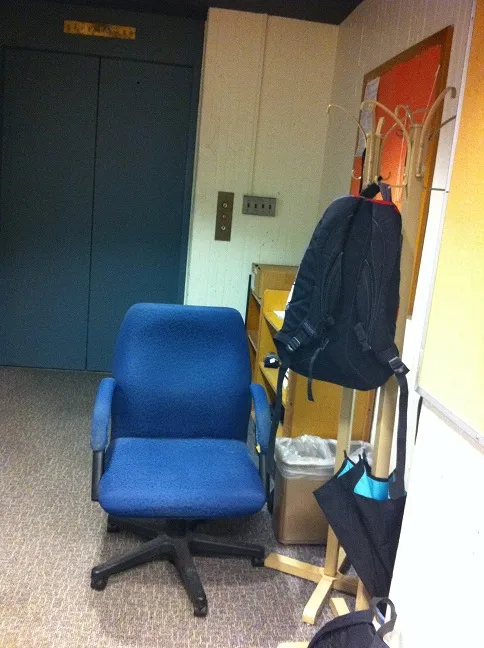
Photo: ParentingPatch, CC BY-SA 3.0, via Wikimedia Commons
Most UK mid-market organisations can tell you what they spend on software. Fewer can tell you who is using it. The gap is not usually fraud or waste on a grand scale; it is ordinary drift. A person leaves, a project closes, a role changes, a contractor's engagement ends — and the licence stays. The renewal arrives, the finance director asks whether the number is right, and the answer is a spreadsheet that was last reconciled when the contract was signed.
A quarterly software census closes that gap. It is not a restriction exercise. It is a recovery exercise: a two-hour routine that turns three lists into one page of decisions, and often pays for the next year's tooling conversation before it starts.
Why quarterly, not annual
Annual reconciliation sounds efficient until you try it. By the time the renewal notice lands, the organisation has already drifted for eleven months. Quarterly reconciliation is smaller, less political and easier to evidence. It also aligns with the rhythm of joiner-mover-leaver processes, supplier renewals and budget reviews. The aim is not a perfect asset register; it is a reliable direction of travel.
The three lists
The routine depends on three exports, all taken on the same fixed date.
- HR leavers, joiners and movers. Include contractors and temporary staff, not just payroll. A contractor who left in August is still a seat if the identity is active.
- Identity provider active accounts. Entra ID, Google Workspace or Okta — whichever is the source of truth for authentication. Export enabled accounts, last sign-in date and licence assignments where the identity provider holds them.
- Licence entitlements. Vendor admin portals, reseller statements or a software asset management tool. Capture SKU, quantity, unit price, renewal date and contract reference.
Match on the user principal name or email address. Where that is not possible, match on employee identifier and record the exception. Do not let the exercise become a data-cleaning project; the first pass is about the shape of the gap, not perfection.
A worked method
Set a date and a scope. For most organisations, the scope is the twenty largest software contracts plus any tool with a material data or security footprint. Export the three lists. Then classify every mismatch into one of six categories:
- leaver still licensed;
- dormant account with no sign-in for 90 days;
- role change that leaves a user over-licensed;
- active user with no licence — a compliance risk, not a saving;
- shared, service or test account that needs a named owner;
- contractor or project account past its end date.
Value each exception at the contract unit price. A 500-seat estate with a 3% recoverable rate is fifteen seats; at £300 a seat that is £4,500. Modest, but enough to fund a discovery piece or a security review. The larger value is the evidence at renewal: a utilisation figure rather than an anecdote.
Recovery, not restriction
Do not switch off accounts to prove a point. Check legal hold, maternity leave, long-term sick leave, regulatory retention, project close-down, shared mailboxes and service accounts. Record the decision, not just the action. A licence retained for a good reason is not waste; it is a managed exception.
Communicate before reclaiming. A short note to line managers explaining that the census is about matching spend to the organisation, not policing individuals, prevents most of the friction. Where a tool is being removed, give users a route to request it back with a business case.
The one-page result
The output should fit on one page and answer four questions: how many exceptions, what is the annualised value, who owns the action, and when will it be closed. A simple table works:
| Category | Count | Annualised value | Owner | Action |
|---|---|---|---|---|
| Leaver still licensed | 8 | £2,400 | IT operations | Reclaim by 15 Jan |
| Dormant 90+ days | 12 | £3,600 | Service desk | Confirm with manager |
| Active user unlicensed | 3 | Risk | IT operations | Regularise |
| Shared account | 5 | £1,500 | Application owner | Assign owner |
Add a utilisation percentage for the top ten contracts. That single number is often more useful to the finance director than the total spend, because it frames the next renewal as a decision about demand rather than a negotiation about price.
Make it routine
Name an owner — IT operations or a finance business partner — and put the census in the quarterly calendar. Add a licence check to the joiner-mover-leaver ticket. Ask suppliers for usage reports where they exist, but do not rely on them alone. Keep the one-pager and the export date; next quarter's comparison is the proof that the routine is working.
The software bill is not the problem. The gap between the bill and the organisation is. Two hours a quarter makes the next renewal a decision, not a surprise.