The curator's problem: five legacy IT exhibits that no longer earn their keep
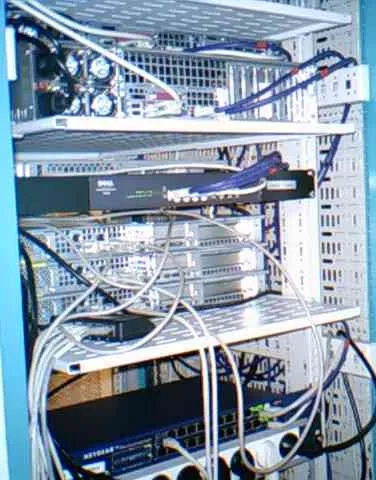
Photo: David Monniaux. Photo taken by myself with a cellular phone. Copyright © 2004, CC BY-SA 1.0, via Wikimedia Commons
Most IT budgets are not really plans. They are accumulations. Each year adds a licence, a report, a customisation or a support arrangement, and each addition is justified by the fact that it already exists. Over time the budget becomes a museum: a collection of exhibits that someone once needed, preserved at recurring cost and protected from scrutiny by the phrase keep the lights on.
That phrase is not dishonest. Some spending genuinely keeps critical services running. The problem is that it is used too broadly. It shelters work that no longer earns its place and crowds out the investment needed for 2026 and beyond. The answer is not a dramatic replacement programme. It is curation.
The museum effect
Legacy spend persists because it is invisible in aggregate and defended in detail. No one wants to be the leader who switches off a report that might be used, or retires a system that might be needed for an audit. So the organisation pays for optionality it never exercises. The cost is not only the licence fee. It is the integration, support, security assurance and management attention that each exhibit consumes.
A useful discipline is to ask a simple question of every material line: would we build this today, in this form, at this cost? If the answer is no, the exhibit needs a test, not an automatic renewal.
Exhibit one: the bespoke report gallery
Every organisation has reports that were built for a former director, a past regulatory question or a merger that has since been absorbed. They run nightly, consume data engineering time and are rarely opened. The test is usage with a consequence. Who receives the report, what decision does it inform and what happens if it stops? If the answer is that it is kept for comfort, it belongs in the archive, not the operating budget.
Exhibit two: the shelfware licence cabinet
Software licences are often bought for a capability that was never fully deployed. Collaboration tools, analytics platforms and specialist modules sit alongside the tools people actually use. The test is active use against entitlement. Count named users, check login data and compare it with the contract. Renegotiate at renewal, reduce tiers or remove the shelfware entirely. This is one of the few areas where savings can be realised without a transformation programme.
Exhibit three: the customisation wing
Custom code in ERP, CRM and finance systems is expensive to maintain and difficult to upgrade. Some of it is essential. Much of it encodes a process that has since changed or a workaround for a constraint that no longer exists. The test is upgrade friction. Does the customisation block patches, delay releases or require specialist skills? If so, it is not an asset. It is a future migration cost. Retire it deliberately, starting with the customisations that carry the highest support burden.
Exhibit four: the manual reconciliation workshop
Not all legacy spend is technology. Some of it is the labour used to bridge systems that should talk to each other. Teams export data, reconcile spreadsheets and re-key information because two platforms were never integrated. The test is the cost of the gap. Estimate the hours, the error rate and the control risk. If the manual work exceeds the cost of a controlled integration, the exhibit is consuming budget in plain sight.
Exhibit five: the just-in-case server room
Many estates retain unsupported applications, local file shares or small server rooms because no one has owned the decision to close them. The test is risk and retention value. Does the system hold records that must be preserved? Is it covered by the organisation's security standards? Can the data be archived and the service retired? If the answer is that it is kept because no one has time to close it, that is a scheduling problem, not a strategic requirement.
Rebalancing for 2026
The purpose of this curation is not to cut IT for its own sake. It is to move money from exhibits that preserve the past to work that changes the future. A practical budget model separates run, grow and transform. Run covers the reliable operation of services that customers and staff depend on. Grow covers incremental improvement and targeted replacement. Transform covers the larger changes that shift how the organisation operates.
Most UK organisations do not need a big-bang replacement to rebalance. They need a portfolio view. Identify the exhibits with the weakest case, set a retirement date and reinvest a defined share of the saving into grow and transform. Protect the run budget where it is genuinely critical, but stop treating every legacy line as untouchable.
The curator's job is not to empty the museum. It is to decide what deserves to be on display, what belongs in storage and what should be disposed of responsibly. An IT budget deserves the same discipline. In 2026, the organisations that make progress will be those that can explain why each exhibit is still funded, and what they would rather fund instead.