The outage file: turning a service failure into board-level evidence

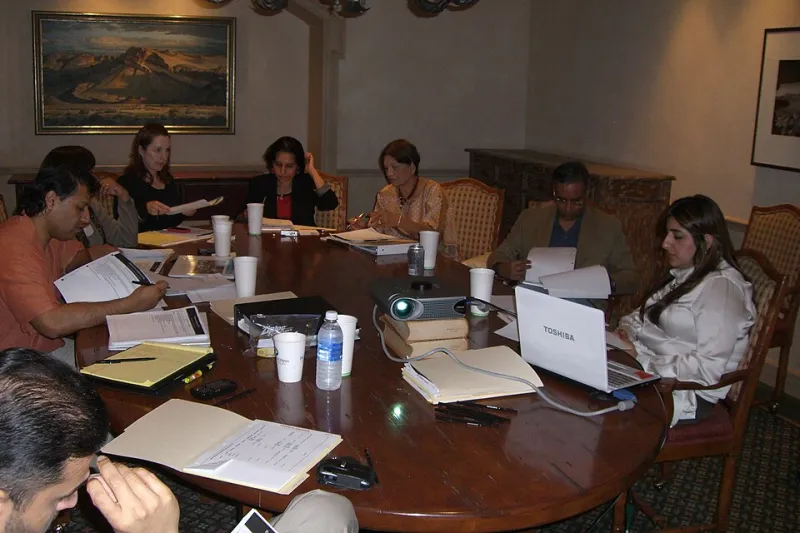
Photo: UK boardroom table with incident review documents and laptop meeting, via i.pinimg.com
When a critical system fails, the immediate priority is restoration. Once service returns, many organisations settle for a brief email: a server issue, an apology and a commitment to learn. That note may close a ticket, but it does not close the loop for the board. A useful post-incident review is not an apology document. It is evidence: a concise record of what happened, what it cost, which decisions were taken and what will change. Done well, it can be drafted in an hour and used for months — in the risk register, the supplier renewal and the next business case.
Why the standard email fails the board
A board does not need a technical narrative. It needs to understand exposure, decision quality and whether the organisation is buying down risk. An email saying that a server issue caused an outage gives directors no basis for any of those judgements. It does not say how long customers were affected, whether the failover was authorised, what the downtime cost or whether the same failure could recur next quarter.
The result is predictable. The incident disappears from the board pack, the underlying risk remains unquantified and the next renewal conversation is conducted without evidence. The organisation may have learned something operationally, but the governance record shows nothing.
Five fields that make a review usable
A tight review does not need a lengthy investigation. It needs discipline about what is included. The following structure is usually sufficient for a UK mid-market organisation.
1. A plain-English timeline. Record the first report, the point of detection, the escalation, each material decision, the point of restoration and the point of confirmed stability. Use times and short sentences. Avoid system jargon unless it changes the meaning. The test is whether a non-technical director can follow the sequence without a glossary.
2. The decision log. State what was decided, by which role and on what information. For example: who authorised failover, who chose to keep the service offline, who contacted the supplier and who approved customer communication. This is not a blame exercise. It is a record of decision rights under pressure, and it often reveals that the escalation route was unclear rather than that an individual performed poorly.
3. The cost in hours and pounds. Express downtime in hours of lost service and in estimated financial impact. Include lost revenue where it can be measured, staff time displaced, overtime, supplier call-out charges, service credits and any customer goodwill cost that can be reasonably estimated. Ranges are acceptable. A board is better served by a defensible range than by a false precision. The finance director should be able to interrogate the assumptions.
4. Two or three changes that would have shortened it. Resist a long list of improvements. Identify the small number of changes that would have reduced either the duration or the cost by a material amount. Each change should have an owner, a date and a measurable test. If a change would not have shortened the incident by at least half an hour or reduced the cost by a defined amount, it probably belongs in normal service improvement rather than the incident review.
5. What remains unknown. State the gaps honestly. If the root cause is not yet confirmed, say so. If the supplier has not provided its report, record that. A review that pretends to certainty is less useful than one that sets out the open questions and the date by which they will be answered.
Blameless, but not accountability-free
A blameless review is not a review without consequences. It separates the behaviour of individuals from the design of the system around them. People should be able to describe what they saw and decided without fear of punishment for honest error. But the organisation still needs accountability for the follow-up actions. The review should name the owner of each change and the date by which it will be complete. That distinction — no blame for the incident, clear ownership for the response — is what makes the document credible to both staff and directors.
From document to evidence
A good review should be filed where it will be used. Add the incident to the risk register with the cost estimate and the planned changes. Reference it in the supplier renewal conversation if a third party was involved. Use it in the next business case if the outage exposed a capacity, resilience or continuity gap. Brief the audit committee or board on the pattern across reviews, not just the individual event.
This is where the hour spent drafting pays back. If the same supplier appears in three reviews, the renewal discussion changes. If the same failover decision appears twice, the escalation design needs attention. If the cost of downtime is consistently material, the business case for resilience investment becomes easier to justify.
A one-hour discipline
The review should be drafted while memory is fresh, usually within a day or two of restoration. The incident manager can prepare the first draft; the service owner and a finance representative can challenge the cost assumptions. Keep the main document to one or two pages, with technical appendices only where they add evidence. The board summary should be three bullets: what happened, what it cost and what changes are now owned and dated.
An outage is not a failure of character. It is a failure of service, and sometimes of design. The organisation owes the board a short, honest account that turns the event into something usable. That account belongs in the governance record, not in a deleted inbox folder.